

Money is an evolution from the first form of transactions within bartering systems becoming a pillar that affects the whole world. Originating a cornerstone of human history and evolution as a society, money has created vast dynamic situations that intersperse all around our history and culture. It has reached every nook and cranny of it, affecting the deepest parts of ourselves–invisible yet existing in every single being who ever lived: our emotions. Just like money that moves society, emotion moves people. Being a very large concept, emotion can hardly be defined by any singular definition. It’s seen generally as a stimulus that governs behavior and appeals to humans themselves.
In the verse of emotions, one of the most prevalent ones is happiness. Often seen as a measure of emotional well-being, it is seen as an alluring thing to have. The nature of its allure lies as the main objective that drives people to do things. Many things can be seen as a tool to achieve happiness, money included. However, in our money-driven and capitalistic society, the end goal is muddled. Money is often equated to happiness instead, the assumption that having money will ultimately end in happiness runs rampant. It’s not unfounded either–money is needed for essential day-to-day life. Not having it robs you of physiological fulfillments. Humans need resources to live and money can provide that.

Figure 1. Gallup U.S Daily Data’s Regarding Monthly Income’s Correlation with Meaning and Happiness
Yet, according to the figure, data from 349.585 participants show that the correlation (r) eventually weakens regarding income as an emotional buffer for well-being. For individuals earning more than $5,000 a month, the correlation between meaning and happiness drops to its lowest point (r = .32) as opposed to the middle-income group that earns $2,000 to $5,000 a month (r = .38) and low income group that earns less than $2,000 a month (r = .45). This decline indicates that after basic comforts are secured, additional financial resources fail to elevate daily happiness, forcing individuals to look beyond money for true satisfaction.
Another survey shows that people who have money and resources have found a lack of purpose in their life. Compared to their less wealthy peers, they were not emotionally wealthy nor in an ideal emotional well-being state that is necessary to flourish and achieve happiness. It seems that happiness is still an elusive objective that many cannot put a price on. Amidst its fleeting nature, gauging the initial emotional state–emotional well-being might prove to be a surer method when gauging the weight of money for happiness.
The noble concept of equating money to happiness itself stems from the grip it has universally. Being the loftier concept, happiness isn’t seen as the more attainable one. Money is often seen as a bridge to reach happiness itself. Without that bridge, people fall into uncertainty that’ll never lead to happiness. ‘Income’ is the name of that bridge.

Figure 2. Correlation Between Household Income and Aspect of Subjective Wellbeing
Due to household income mostly affecting the perception of the ability to meet everyday’s needs, this perception entwines income to happiness. This is due to the perception being a goal that constantly changes. An everyday necessity of a low-income family will differ from a high-income one. Thus, those self-created needs reach a stop when they’re objectively wealthy. Affecting their happiness, income stops being a variable that matters so much. To reach this conclusion, Morrison used path model analysis to evaluate complex relationships between variables; 5197 participants showed results through the correlation of the impact (b), the margin of error (se), the signal strength (t), and the fluke detector (f).
|
Classification |
Symbol |
Definition |
| Impact (Coefficient) | b | The direction and size of the relationship; how much the ability to meet daily needs makes happiness go up or down. |
| Margin of Error (Standard Error) | se | The accuracy of b; the lower the se, the higher the accuracy. |
| Signal Strength (t-value) | t | The strength of the impact compared to the margin of error; the further t is from 0, the stronger it is. |
| Fluke Detector (Probability) | f | The measurement of the result being inaccurate; the further f is from 0, the lesser chance of it being a fluke. |
Table 1. Classification, Symbol, and Definition Used In Figure 2. Correlation Between Household Income and Aspect of Subjective Wellbeing
Using this analysis, data shows that happiness rises linearly alongside the ability to meet everyday needs went up (b = .10, se = .01, t = 10.45, p < .01), quality of life also rose (b = .17, se = .01, t = 20.39, p < .01), and stress dropped sharply (b = -.08, se = .01, t = -7.69, p < .01). The mediation test also results in income being a significant indirect effect for happiness by the ability to meet needs (b = .08, se = .01, t = 10.00, p < .05). However, money still holds a small level of power towards happiness that is direct (b = .05, se = .02, t = 2.95, p < .05). It is concluded that income has an indirect effect which is mediated by the perception to fulfill one’s need as high as 55-60%. Consequently, the opposite is also true: lower income, especially lower than the usual level of household income often faces poverty, economic difficulties, and financial strain that causes depression, increases stress, and undermines happiness.
Furthering the importance of income, there is also a certain threshold that is implied to play a crucial part in the mechanisms of money and happiness. According to Buttrick, people in the United States often find themselves in an unhappy state when their income is less than $100,000. Income and happiness moves linearly, the higher the income shows a significant increase towards happiness. Especially coming from the folks with less than $100,000.
This isn’t isolated in the US, it is also applicable in Indonesia. According to Rahayu, based on the data from Indonesia Family Life Survey (IFLS) covering 13.535 households in 13 provinces. The result shows the relationship between happiness and income move positively since when income increases, happiness also increases even though there’s still a marginal diminishing return. This marginal diminishing return comes from the non-linear trajectory where Happiness = β₁(y) – β₂(y²), with β₁ serving the same purpose as (b) for real income/capita (y) and β₂ for income square (y²) to calculate where the diminish starts. Because the coefficient for (y) is positive and the coefficient for (y²) is negative, the data creates an inverted U-shaped curve.The specific income threshold is 6 million Rupiah/month with higher income people tending to be happier than other people. Even when going above the threshold, there are still positive correlations between the two that pushes money as a systematic valuation of happiness. This factor proves to be a significant variable psychologically.
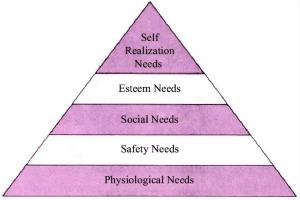
Figure 3. Abraham Maslow’s Hierarchy of Needs Funnel
Higher income also implicates a more stable financial state. Lower ones, especially below the threshold, can cause negative psychological reactions due to how it endangers the people experiencing it. According to Maslow’s Hierarchy of Needs, needs are unlocked in a linear way that causes them to be still and unable to move upwards if the current one isn’t fulfilled, also known as the principle of relative prepotency. Unless income covers the physiological and safety needs, people can’t move towards the social needs that will make them closer to happiness. In Indonesia, a regression analysis shows that PDB/regional capita and gini coefficient are the two factors that affect the happiness index. An increase of 1% in PDB causes happiness to increase 0.02% meanwhile an increase of economic inequality that’s factored by income inequality (gini coefficient) decreases happiness 0.08%. If these unfulfilled needs are prolonged, it can influence other areas since financial stability and emotional well-being are deeply interconnected.
Without an income that crosses the threshold, people can be negatively affected mentally due to the lack of ‘safety net’ in their daily life. An income that’s equal or less than the average pushes people to be on edge about their financial situation since they have nothing else to rely on other than their current job. Financial security itself is seen as a privilege that isn’t feasible up to this point. All the economic and psychological signs point to the fact that money is intrinsically needed and can be equated to happiness since the loss of money is directly the loss of happiness.
However, this is strictly seen from the income and threshold of people who lack or can’t afford many resources. Looking high above, people who own abundant resources have different reactions towards the price of happiness itself. Since they can afford it, it has less value. The lack of scarcity causes the significance towards psychological well-being to lessen. This is attributed to the Easterlin Paradox. This paradox refers to the lessening relation between happiness and income in the long run.

Figure 4. Income and Subjective Well-Being Curve
Correlating happiness with subjective well-being, the curve will slowly flatten out where additional income will create less of a positive psychological correlation due to the diminishing return. This is caused by the nonexistent proof that average happiness is increased as people get richer despite happiness occurring more often when passing the threshold. Since Easterlin’s approach towards the paradox primarily covers the country’s happiness relative to the Gross Domestic Product (GDP) growth, happiness is seen as a more relative thing individually. As long as the threshold is crossed, the individual’s happiness is assumed to be unaffected significantly by income. This emphasizes that having higher income, specifically more money, will not bring less misery and increase happiness in that state of abundant resources.
Quoting Ng, “Happiness is more important than the objective concepts of choice, preference and income.” which brings forth the argument of implementing more subjective concepts rather than sticking strictly to objective concepts. Ng emphasized on happiness being the primary objective in which money is rendered useless if not for a means to achieve happiness and the inability of money to buy happiness. This is supported by the hedonic treadmill theory that states individuals adapt to changes in their ever-changing circumstances which cause a cycle of temporary satisfaction and increasing desire. Contextually speaking, income becomes simply means to an end since crossing the threshold causes people with abundant resources to temporarily reach satisfaction that is misconstrued as happiness. This causes the cycle to start since the satisfaction didn’t last long due to the people adapting towards the resources they have, causing happiness to return to baseline.
Money and income seen as just a ‘means to an end’ also prevails in the form of technology paradox that increases wealth, however happiness is still stagnant. This implication stomps down on money equating happiness. Instead, the key to happiness when surpassing the threshold moved from income towards more abstract subjects like emotional well-being. In assessing happiness deeper, Diener specified components such as positive affect and life satisfaction. Positive affect itself is the experience of feeling joy, content and pleasant emotions, while life satisfaction refers to a cognitive and reflective judgment towards the quality of life. The excess resource above the threshold exposes the fundamentally hollow metrics since happiness isn’t obtained by quantifiable data, but through internal process and emotions. Positive affect and life satisfaction that explicitly contributes to happiness can’t be quantified by the usual metrics that cover money and income.
In covering whether money can truly be equated to happiness, it instead exposes the fact how conditional those equations are. How integral money can be to happiness all depends on the context it is chosen from. Money itself can only be equated to happiness when people are dealing with scarcity or income below threshold which causes their psychological state to be negatively affected since they lack any safety net and are halted from flourishing due to their needs being unmet. However, the value of money drops down quite drastically once the threshold is met.
In the context of people with abundant resources that don’t have to worry over lower needs, money can no longer be equated to happiness. Instead, emotional well-being surges as a top contender that dictates how happiness is achieved. Money instead matters less and less thanks to Easterlin Paradox and the diminishing marginal return at play. This psychological pivot emphasizes how additional wealth can’t manufacture happiness and strengthens money as one of the bridges to happiness, not something that can replace it. Ironically, at this stage money becomes the replaceable aspect in achieving happiness.
The equation between money and happiness is dictated by your own financial well-being. Factors that affect happiness in a significant way such as emotional well-being are not derived by money specifically. Ultimately, emotional well-being acts as the true baseline of happiness once materialistic drives are no longer the first priority. It is no longer a matter of happiness that can be bought with wealth, it simply cannot be quantified nor priced. At a threshold, happiness transforms into an objective that’s unavailable to purchase. Instead, it is variables such as emotional well-being, positive affect, and life satisfaction that can truly dictate the achievement of happiness.
Editor: Tim Kajian
Penulis: Aisha Illiana Yananda
REFERENCES
Berger, Michele W. “Does More Money Correlate with Greater Happiness? Penn-Princeton Research.” Penn Today, 6 March 2023. https://penntoday.upenn.edu/news/does-more-money-correlate-greater-happiness-Penn-Princeton-research.
Bridgman, Todd, Stephen Cummings, and John A. Ballard. “Triangulating Maslow’s Hierarchy of Needs: The Construction of Management Studies’ Famous Pyramid.” Academy of Management Learning & Education 18, no. 1 (March 2019): 81–97.,10.5465/AMBPP.2017.14177abstract.doi.org
Catapano, Rhia, Jordi Quoidbach, Cassie Mogilner, and Jennifer Aaker. “Financial Resources Impact the Relationship Between Meaning and Happiness.” Emotion 23, no. 2 (2023): 504–11. https://doi.org/10.1037/emo0001090.
Diener, Ed. “Subjective Well-Being.” Psychological Bulletin 95, no. 3 (1984): 542–575. https://labs.psychology.illinois.edu/~ediener/Documents/Diener_1984.pdf.
Easterlin, Richard A. “Easterlin Paradox.” Dalam Encyclopedia of Quality of Life and Well-Being Research, edited by Filomena Maggino. Cham: Springer, 2023. https://link.springer.com/rwe/10.1007/978-3-031-17299-1_802.
Easterlin, Richard A. “The Easterlin Paradox.” IZA Discussion Paper No. 13923, Institute of Labor Economics, Bonn, December 2020. https://www.iza.org/publications/dp/13923/the-easterlin-paradox.
Easterlin, Richard A. “The Easterlin Paradox: An Interpretation.” In Studies in Biography and Economic History, edited by Robert Fogel. ResearchGate, February 2015. https://www.researchgate.net/publication/272226634_The_Easterlin_Paradox_An_Interpretation
Gleibs, Ilka. “Does Money Buy Happiness? It Depends on the Context.” LSE British Politics (blog). London School of Economics and Political Science, July 3, 2013. https://blogs.lse.ac.uk/politicsandpolicy/does-money-by-happiness-a-dynamic-analysis-of-relationships-between-financial-and-social-capital-on-life-satisfaction/.
Investopedia. “The History of Money: From Barter to Banknotes.” Investopedia. Last edited 25 November 2024. https://www.investopedia.com/articles/07/roots_of_money.asp.
Jennings, John. “Does Money Buy Happiness? Actually, Yes.” Archbridge Insights, 12 February 2024. https://archbridge.com/insights/does-money-buy-happiness-actually-yes/.
Killingsworth, Matthew A. “Experienced Well-Being Rises with Income, Even Above $75,000 per Year.” Proceedings of the National Academy of Sciences 118, no. 4 (January 2021): e2016976118.doi.org.
Killingsworth, Matthew A., Daniel Kahneman, and Barbara Mellers. “Income and Emotional Well-Being: A Conflict Resolved.” Proceedings of the National Academy of Sciences 120, no. 10 (March 2023): e2208661120.doi.org.
Maslow, Abraham. A Theory of Human Motivation. Lulu.com, 2013. https://books.google.co.id/books?id=CkonDwAAQBAJ.
Morrison, Philip S. “How Much Happiness Does Money Buy? Income and Subjective Well-Being in New Zealand.” New Zealand Population Review 37 (2011): 45–72. ResearchGate. https://www.researchgate.net/publication/282367989_How_Much_Happiness_Does_Money_Buy_Income_and_Subjective_Well-Being_in_New_Zealand.
Ng, Yew-Kwang. “What Is Happiness? Why Is Happiness Important?” In Happiness—Concept, Measurement and Promotion, 1–11. Singapore: Springer, 2022. https://link.springer.com/chapter/10.1007/978-981-33-4972-8_1.
Page, Jane Aubry. “Why Are the Wealthy So Unhappy?” World News Group (WNG), 21 July 2025. https://wng.org/roundups/why-are-the-wealthy-so-unhappy-1753114735.
Rahayu, Theresia Puji. “The Determinants of Happiness in Indonesia.” Mediterranean Journal of Social Sciences 7, no. 2 (2016): 393–404. 10.5901/mjss.2016.v7n2p393.doi.org
Ramadhani, Atika Prissila, and Yeti Lis Purnamadewi. “Drivers and Cluster Analysis of Happiness in Indonesia.” Jurnal Ekonomi dan Kebijakan Pembangunan 13, no. 2 (December 2024): 105–115. https://doi.org/10.29244/jekp.13.2.2024.105-115.
ScienceDirect. “Hedonic Treadmill.” ScienceDirect Topics. Accessed 27 May 2026. https://www.sciencedirect.com/topics/psychology/hedonic-treadmill.
Tsui, Josephine, et al. “The Multidimensional Wealth of Refugees.” Migration Studies 12, no. 1 (March 2024): 1–25. https://academic.oup.com/migration/article/12/1/1/7236828.
United Way Capital Region. “Four Ways Financial Security Impacts Mental and Physical Health.” United Way Capital Region. Accessed 27 May 2026. https://www.myunitedway.ca/news/four-ways-financial-security-impacts-mental-and-physical-health/.
University of Oxford, Department of Experimental Psychology. “Happiness.” University of Oxford. Accessed 27 May 2026. https://www.psy.ox.ac.uk/research/social-foundations/Happiness.