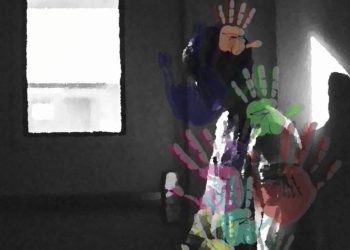

“I teach you the Overman. Human being is something that must be overcome. What have you done to overcome him?
Have you ever felt like your life means nothing? Trying so hard to be good at something: ace math class, become employee of the month, or a successful entrepreneur? And you can feel this hollowness inside your heart, mind, belly, and everywhere when you can’t achieve that.
Why am I always seeking for more? Will achieving that fulfill my needs?
And the next thing you know, you are comparing yourself with someone who is better than you, receives more love or is good at something you’re not. You know it’s bad to scroll through instagram and beat yourself up because your life is not as perfect as hers. You even agree when someone says that Instagram is toxic, but, you do it anyway. You think about this day and night, and find yourself so stressed out, maybe not to the point where you want to end your life, but you do constantly wonder what is God’s plan for you? Why should I be here if my presence does not impact the world in any way?
One of the root problems that cause people to doubt their lives is because they are unable to accept and claim accomplishments no matter what level of success, even with hard-won achievements because there is an irrational fear that you don’t deserve the success because it feels like everything you do to achieve that success was fraudulent, and that consequently you are a fraud as well1McBride, K., 2011. Are You Plagued With Self-Doubt?. [online] Psychology Today. Available at: https://www.psychologytoday.com/us/blog/the-legacy-distorted-love/201104/are-you-plagued-self-doubt>">https://www.psychologytoday.com/us/blog/the-legacy-distorted-love/201104/are-you-plagued-self-doubt [Accessed 3 May 2020].. Studies show that such cases of “Impostor Syndrome” affects up to 70% of working professionals at some point in their careers2Bravata, D., Watts, S., Keefer, A., Madhusudhan, D., Taylor, K., & Clark, D. et al. (2019). Prevalence, Predictors, and Treatment of Impostor Syndrome: a Systematic Review. Journal Of General Internal Medicine, 35(4), 1252-1275. https://doi.org/10.1007/s11606-019-05364-1.
Self-doubt can also make us search for any reason to justify our means to life. We have this aphorism, “fake it till we make it” because we believe that we don’t have enough capability to improve ourselves. We want to impress people around us, proving that we are successful and happy, so we fake it in hope for it to become a faith that helps our imagination into a reality3Fenn, K. and Byrne, M., 2013. The Key Principles Of Cognitive Behavioural Therapy. [online] SAGE Journals. Available at: https://journals.sagepub.com/doi/full/10.1177/1755738012471029>">https://journals.sagepub.com/doi/full/10.1177/1755738012471029 [Accessed 3 May 2020].. For the most part, we are also trying to convince ourselves that we really are that person I am trying to be. 4Mcgee, Robert. (2017). THE IMPOSTOR SYNDROME [A.K.A. “FAKE IT UNTIL YOU MAKE IT”]: A Case Study. Available at: <https://www.researchgate.net/publication/320566690_THE_IMPOSTOR_SYNDROME_AKA_FAKE_IT_UNTIL_YOU_MAKE_IT_A_Case_Study[Accessed 3 May 2020].
In his book, The Happiness Trap, Dr. Russ Harris talked about how our culture makes us obsessed with happiness5Harris, R., 2014. The Happiness Trap Pocketbook. New York: Constable & Robinson.. Harris argued that people have a misleading idea about happiness promoted by society, and this false idea explains a lot about the neverending epidemic of stress, anxiety, and depression plaguing us today. In fact, studies have shown that rates of stress, anxiety and depression have increased over time, particularly among younger generations 6Apa.org. 2020. [online] Available at: https://www.apa.org/news/press/releases/stress/2018/stress-gen-z.pdf>">https://www.apa.org/news/press/releases/stress/2018/stress-gen-z.pdf [Accessed 3 May 2020].. The happiness trap refers to how we will strive for more if we keep searching for happiness. And this trap was built by expectations that are engulfed in our society. A study of social expectation in Japan7Hasegawa, K., Shinohara, C. and Broadbent, J., 2007. The Effects of ‘Social Expectation’ on the Development of Civil Society in Japan. Journal of Civil Society, 3(2), pp.179-203., concludes that social expectations are built through elite groups or power in individuals. And that expectations are what govern our behaviour.
We intimately attach our lives toward society, striving to be socially accepted and respected. In the process we frequently forget the most important step of life; figuring who you truly are; thus, finding peace and tranquility forever more. Is it possible to attain such freedom? To be totally free from all this stress and unrealistic life? Maybe we can get the answer by understanding what kind of “liberation” one should seek, as well as the realistic way to practice it.
Legendary Aristotle (384-322 BC) talks of the meaning of subjective life. For him, one should live their life in order to fulfill his/her purpose 8Pursuit-of-happiness.org. 2020. Aristotle And Happiness. [online] Available at: https://www.pursuit-of-happiness.org/history-of-happiness/aristotle/>">https://www.pursuit-of-happiness.org/history-of-happiness/aristotle/ [Accessed 3 May 2020].. He further explained the meaning of a good life as the main purpose of a human’s existence 9Aristotle. (1930). The Nichomachean ethics of Aristotle. J.M. Dent.. In his Nicomachean theory, he argues that a good life is a life of excellence, that is, reaching the end of life which is happiness. True happiness can only be obtained if a human is behaving according to ethical virtue so that each individual may flourish in whatever they do. While he already acknowledged the uniqueness of each human’s purpose, his drafting of universal virtues is a clear and one of the most famous attempts at creating a society-wide held belief. While well-intended, does the virtues really lead each individual to their flourishment, ergo, for Aristotle, each’s happiness?
We are only living in universe’s wildest dream
Our parameters of a life fully flourished are different from one another, depending on how we see our end in life. Within the social structures of our societies, there will be an idealized and universal standard for everybody so that we may achieve the ideals and purposes of the society. Take for an exemplar, the cliche standards of beauty. Society builds expectations about what is said to be beautiful and what is not. We will never be free from this ideal because we have the need to be in a group. We will do anything just for us to be accepted even though it means we have to inject plastic to our cheeks and chests 10Pittman, Thane & Zeigler, Kate. (2007). Basic human needs.. Millennium-journal of International Studies – MILLENNIUM-J INT STUD. 1.. The more exclusive a group is, the more demanding the standards will be. And this injustice goes on and on that we will never be free from the attachment of society.
You may frequently encounter enforcement of such ideals done by your friends, such as to be married at a certain age and to work at a high-paying job. Those ideals then are being generally accepted by most individuals inside that society in which it became social norms. Those social norms then dictate how individuals may behave inside and shape their point of view which manufactured the standard of life. And that standardized life is what makes the trap we mentioned before that stresses us out. If life is subjective, how can a group of people set those standards?
Do you ever wonder what if the things we believe we see is not what we see? That the world is not objectively real and we are just making this world up. What if we are actually in a mental ward and this reality that we know is just an imagination? Or if a mental illness is even real? What if those who we say are mentally ill actually are the healthy one? A Netflix movie, Fractured, tells us a story that often disturbs us, making the term “Fake it till Make it” real. Long story short, in that movie, the main character believes that a hospital kidnapped his family where the reality is nothing like that. He refused to accept the truth of how he killed his wife and daughter that he faked a story where the hospital is a ghory mysterious little place. He invested a reality in his head and it became real. Not just an imagination that we make every night, but a reality based on an imagination. Through that movie, we can only wonder who is telling the truth and who is imaginating.
If the purpose of life is really subjective, as most of us intuitively believe, and that perception affects how we see the world, then there is no right answer to the matter of what life is. If something is subjective, we can’t really explain it scientifically. And that is an imagined reality. Let’s talk about the term imagined reality as it is mentioned in Yuval Noah Harari’s Sapiens. From that we can conclude that imagined reality is humans’ power to collectively visualise a better future and work together to achieve it11Harari, Y., Purcell, J., & Watzman, H. Sapiens.. We believe that in order to complete our purpose in life we need to accomplish these things and in return, it has become a reality in our human world that preserves itself.
We are building this reality in our heads, collectively, that we need all these things to accomplish so that we can truly finish our goal of life. And the hideous thing is that imagination did not come from constant updates of each individual’s needs and wants. It was forced upon the individuals so we need to accept those standards. Then we are not an individual. We are highly connected to one another more than we think we are. Your imagination is my imagination. So we are stressed out because of each other. When can we be free from other humans and become the real self we are?
Longing for freedom
In his “Philosophy of Freedom”, Rudolf Steiner divides freedom into two categories; inner and outer freedom12Sparby, T., 2016. Rudolf Steiner’s Idea of Freedom. Epoché, 21(1), pp.173-196.. A person achieves true inner freedom when he knows how to bridge the external world and our internal thoughts, such that there is freedom to construct an inner structure of the world. This can be connected with knowledge. Meanwhile, outer freedom is achieved in connecting the bridge of his ideals and the constraints of external reality letting our actions be inspired by what he calls “moral imagination”. This specific freedom is attained by free expression of self. Steiner said that we can only feel freed if we have both freedoms.


Inner and outer freedom are separated by intellectual and moral gaps (respectively). In this discussion, we can focus on the moral gap. Moral gap appears if there is a difference in our self as a person to society’s or nature’s subjectivity on the moral of a person. It is more clearly explained in John E. Hare ‘s book “The Moral Gap”. This book discusses the gap between the moral demand on us and our natural capacities to meet it. According to Steiner, we can bridge this gap with the realization of free spirit. Where free spirit, according to the dictionary, is someone who is independent or uninhibited. In other words, we can only be free if we do not let ourselves be affected by external moral constructs. Which leads us to the theory of ubermensch – the Overman.
Only the Overman can be free
In this sense of freedom, we can be near-certain that we will never be truly free. We are bound to society’s thought too tightly that it is unthinkable to become independent. However, Friedrich Nietzsche thought otherwise – he dreams of the “Overman”, also called the “Overman”. The Overman, according to Nietzsche, is where we are headed, or at least, where we should be headed15Poisot-Cervantes, H. (2018). NIETZSCHE’S IDEA OF THE OVERMAN AND THE CURRENT STATE OF COLLECTIVE CONSCIOUSNESS. Qspace.library.queensu.ca. Retrieved 3 May 2020, from https://qspace.library.queensu.ca/bitstream/handle/1974/24055/Poisot-Cervantes_Hiram_201804_MA.pdf?sequence=3&isAllowed=y0..
Nietzsche believed that man’s evolution is not at its end, and that the next step is the Overman. Unlike the Superman of comic book fame, Nietzsche’s Overman is superior to humans in a more subtle way; not superhuman strength, or the ability to fly, or ice breath or laser beam eyes. The Overman is characterized by its extreme freedom, by virtue of unshakeable sheer mental fortitude. The Overman sees through the shackles of society, and breaks free. He disconnected himself from the forces of social herd, and created his own values 16Ccrma.stanford.edu. 2020. Nietzsche’s Idea Of “The Overman” (Ubermensch) Is One Of Themost Significant Concept In His Thinking. [online] Available at: <https://ccrma.stanford.edu/~pj97/Nietzsche.htm [Accessed 3 May 2020]..
As we know we live in an imagined reality, all that we see in this world are products of people’s imaginations. Nietzsche suggested that all current interpretations of truth are, in fact,inadequate17Poisot-Cervantes, H. (2018). NIETZSCHE’S IDEA OF THE OVERMAN AND THE CURRENT STATE OF COLLECTIVE CONSCIOUSNESS. Qspace.library.queensu.ca. Retrieved 3 May 2020, from https://qspace.library.queensu.ca/bitstream/handle/1974/24055/Poisot-Cervantes_Hiram_201804_MA.pdf?sequence=3&isAllowed=y0.. We can only be free from society’s thoughts and standards if we have our own values, completely unaffected by others. The Overman doesn’t care about what people think and (s)he has much deeper consciousness than most people. To be The Overman means to be aware of the fact that life might mean much suffering and has no inherent meaning, yet keep living and finding his/her own meaning 18MyGestalTherapy. 2020. 5 Steps To Become Nietzsche’s Ubermensch (Superman). [online] Available at: <https://mygestaltherapy.com/5-steps-to-become-nietzsches-ubermensch-superman/ [Accessed 3 May 2020].. And to be completely free from all mundane thoughts, we need to understand that all morality is subjective, like an ubermensch, and it is no easy task. Life might be a nihilistic machination, fraught with complex yet meaningless mechanisms. But, does it have to be that way?
Editor : Anugerah Pekerti Islamilenia, Rama Vandika Daniswara, Miftah Rasheed Amir
Illustrator : Muhammad Daffa Nurfauzan
Referensi